If you’ve searched „what to expect after cataract surgery,“ you probably have more questions than answers right now. The recovery process, the follow-up visits, the RxSight® ultraviolet (UV)-protective glasses—it can feel like a lot, especially when no one has walked you through it in plain terms.
Here’s a clear look at what recovery actually involves—and what questions are worth bringing to your surgeon.
For informational purposes only. Not intended as medical advice. Always consult your eye care professional for guidance specific to your situation.
What Happens Immediately After Cataract Surgery?
Immediately after cataract surgery, you’ll spend a short time in a recovery area while the sedation wears off. Most patients go home the same day. Your eye will likely be covered with a shield or patch, and you may notice blurry or hazy vision—this is normal in the first hours and days. You’ll be given postoperative instructions, including eye drops to help with healing and inflammation. Most people need someone to drive them home. Your eye care team will give you a clear checklist of what to do—and what to avoid—in the first 24 hours.
Most cataract procedures take under 30 minutes, and patients are awake but relaxed throughout. The lens inside your eye, which has become clouded by the cataract, is removed and replaced with a synthetic intraocular lens (IOL). The type of lens you and your surgeon choose before surgery will affect what your recovery and follow-up process looks like.
In the hours immediately after surgery, common experiences include:
- Mild discomfort, grittiness, or sensitivity to light
- Blurry or hazy vision as the eye begins to heal
- Watery eyes or mild redness
These are expected parts of the healing process. Your eye care team will let you know which symptoms are normal and which would warrant a call to the office.
What Is the Cataract Surgery Recovery Timeline?
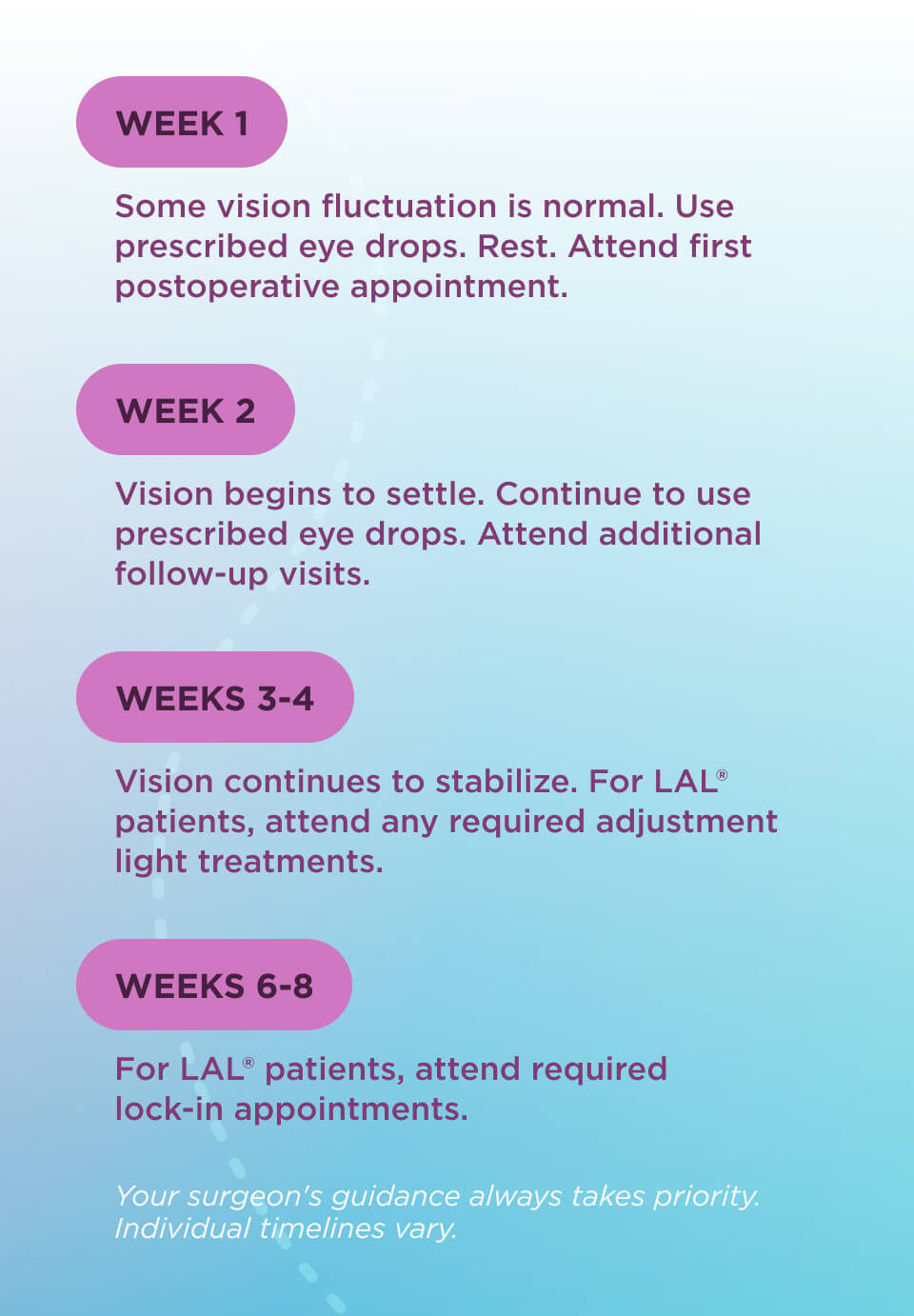
Most patients experience a staged recovery after cataract surgery. In the first week, vision may fluctuate and light sensitivity is common. By weeks two through four, many patients notice their vision beginning to settle, though this varies depending on the individual and the type of lens implanted. Full stabilization can take a month or longer.
Your eye care team will monitor your progress through a series of postoperative visits. If you received the Light Adjustable Lens™ (LAL®), your recovery timeline will also include a light treatment phase, which typically begins around 3 weeks after surgery once your eye has healed sufficiently.
Here’s a general framework for what recovery tends to look like, though your surgeon’s guidance takes priority:
Week 1
Rest is important. Avoid rubbing your eye, strenuous activity, and swimming. Use your prescribed eye drops as directed. Vision may fluctuate—this is normal. Attend your first postoperative appointment, typically scheduled within 24–48 hours of surgery.
Week 2
Most patients begin to feel more like themselves during this period. Light sensitivity often eases. Continue your eye drops as prescribed. Your surgeon may schedule additional follow-up visits to monitor healing.
Weeks 3–4
Vision continues to stabilize. If you received the LAL, your required adjustment light treatment appointments will typically begin during this window, with 3–5 days between treatments, followed by your required lock-in appointments which will make your prescription permanent.
Weeks 6–8
For the average LAL patient, required lock-in appointments are typically completed within this period. Your surgeon will let you know when you’ve reached that point and what to expect going forward.
What Are the Postoperative Visits For?
Postoperative visits after cataract surgery serve a specific purpose: your surgeon uses them to monitor how your eye is healing and to make sure everything is progressing as expected. For patients who receive the LAL, these visits also include the light treatment appointments—brief, non-invasive UV light sessions performed in your doctor’s office that allow your surgeon to fine-tune the prescription based on how your vision has actually settled after surgery. These visits aren’t extra steps. For LAL patients, they’re the mechanism through which the lens gets customized to you.
One of the most common things patients hear about the LAL is that it requires more post-surgery appointments than a standard lens. That’s accurate. But it’s worth understanding what those appointments are actually for.
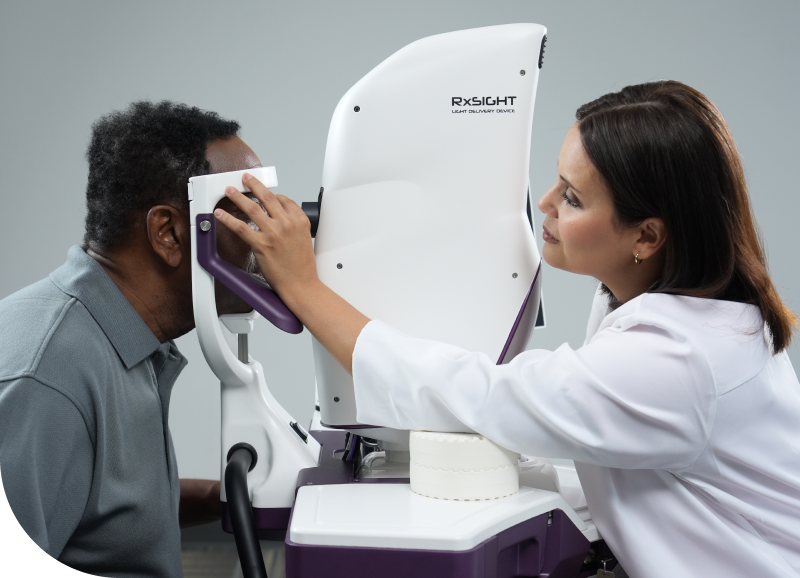
Standard IOLs are fixed—their power is determined before surgery based on preoperative measurements. Once implanted, the prescription is set. The LAL works differently: it’s made of a photosensitive material that responds to UV light, which means its power can be adjusted after surgery. That adjustment happens during a series of office visits, using a device called the Light Delivery Device™ (LDD™).
For patients who want more input into their visual outcome, this process is designed to give the surgeon the ability to fine-tune—rather than simply predict—what the lens delivers.
What Is the UV Protection Period, and Why Does It Matter?
Patients who receive the LAL are required to wear the RxSight UV-protective glasses during all waking hours from the time of surgery until 24 hours after their final lock-in treatment—a period that typically spans several weeks. This is because the LAL is made of a photosensitive material that responds to UV light. Until the lens has been locked in, unprotected exposure to UV light, including sunlight, could cause unintended changes to the lens. The RxSight UV-protective glasses prevent this. Patients receive three pairs: tinted, clear, and clear readers.
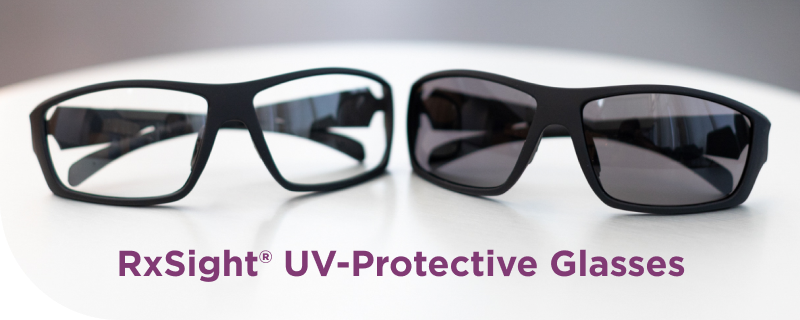
This is one of the parts of LAL recovery that patients sometimes find unexpected. The RxSight UV-protective glasses aren’t optional—they’re a required part of protecting the lens while it’s still in its adjustable phase.
Think of it this way: the same property that makes the LAL adjustable—its sensitivity to UV light—also means it needs to be shielded from accidental UV exposure until the prescription is finalized. The RxSight UV-protective glasses are how that protection happens outside the clinic.
Your lens also includes a built-in UV protection layer called ActivShield™, which works alongside the RxSight UV-protective glasses to help prevent accidental exposure from altering the lens before the final lock-in treatment.
Once your lock-in treatments are complete, the lens is no longer photosensitive, and the RxSight UV-protective glasses are no longer required.
What If My Vision Doesn’t Feel Right After Surgery?
It’s not uncommon for vision to feel unclear or unsettled in the weeks following cataract surgery as the eye heals. If you have concerns about your vision after surgery, the right step is to contact your eye care team—they can assess what’s happening and determine whether any adjustment to your care plan is appropriate. For patients with the LAL, the light treatment phase is specifically designed to allow for post-surgical fine-tuning. Rather than the prescription being locked in before surgery, the LAL process gives your surgeon the ability to make adjustments based on how your eye has healed. If something doesn’t feel right, that’s a conversation to have with your surgeon or optometrist.
The period after cataract surgery can bring some uncertainty, especially in the first weeks when vision may still be fluctuating. It’s worth knowing the difference between what’s expected and what warrants a call to your care team.
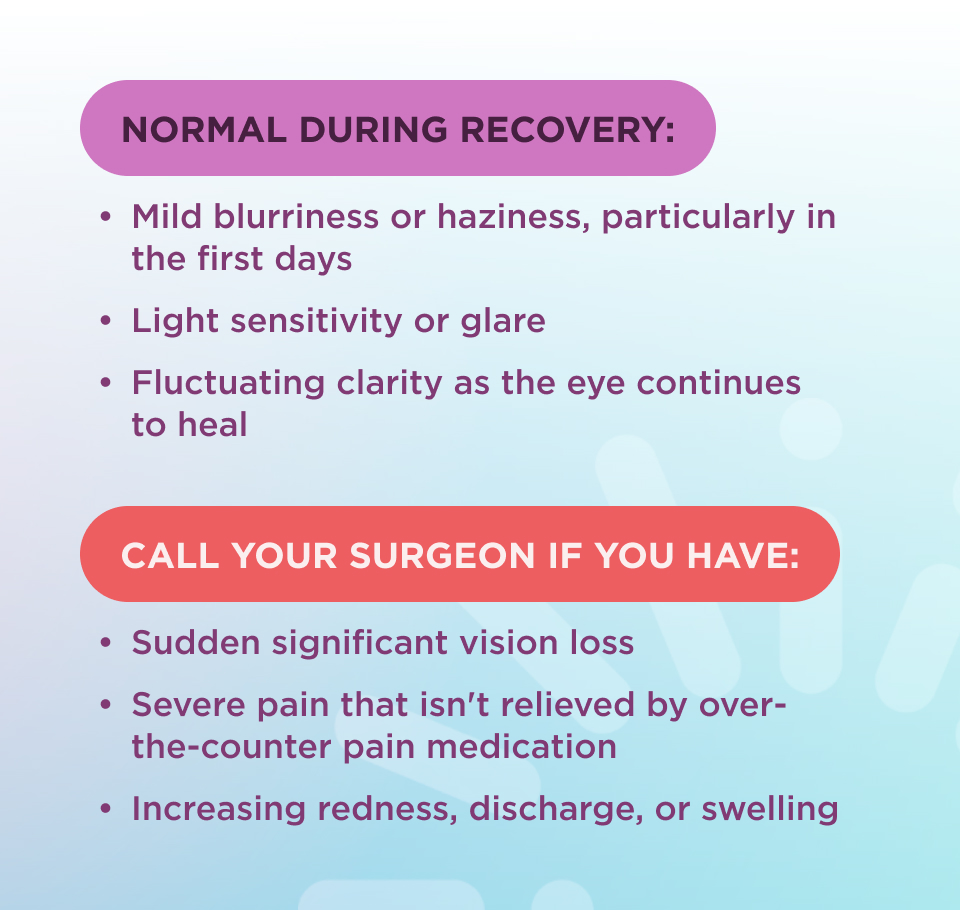
Normal experiences during recovery can include:
- Mild blurriness or haziness, particularly in the first days
- Light sensitivity or glare
- Fluctuating clarity as the eye continues to heal
Experiences that warrant a prompt call to your surgeon include:
- Sudden significant vision loss
- Severe pain that isn’t relieved by over-the-counter pain medication
- Increasing redness, discharge, or swelling
One of the more common reasons vision may feel unsettled after cataract surgery is residual astigmatism—a refractive condition where the eye’s curvature affects how light focuses. This can happen even with careful preoperative measurements, because healing affects refraction in ways that can’t always be fully predicted before surgery.
For patients with the LAL, this is exactly the kind of situation the adjustment process is designed for. Rather than the prescription being finalized before surgery, the light treatment phase gives the surgeon the ability to address what the eye actually needs—including cylinder correction—based on how healing has progressed.
For most questions about how your vision is progressing, or whether what you’re experiencing is normal, your surgeon and optometrist are the right resource. They know your specific situation and can give you guidance that accounts for your individual healing process.
Frequently Asked Questions
These are the questions patients actually ask—and the straightforward answers they deserve.
How many follow-up appointments will I need after cataract surgery?
The number of postoperative visits depends on your surgeon’s protocol and the type of lens you receive. Most patients have at least one visit within 24–48 hours of surgery, followed by additional check-ins over the following weeks. For patients who receive the LAL:
You will receive between 1 and 3 light treatments, each lasting approximately 90 seconds and separated by at least 3 days. The total number of light treatments is based on achievement of the desired visual outcome that you and your surgical eye care team selected. Once you have achieved this visual outcome, the prescription is permanently locked with 2 required final light treatments to prevent any further changes.
Your surgeon will give you a specific schedule before or at the time of your procedure.
Can the Light Adjustable Lens correct astigmatism after surgery?
Yes—one of the purposes of the LAL adjustment process is addressing residual astigmatism that may remain after the eye has healed. Because the lens prescription is finalized after surgery rather than before, the surgeon can account for cylinder correction based on actual post-healing measurements rather than preoperative predictions. Patients with astigmatism who are considering cataract surgery should discuss this with their surgeon to determine whether the LAL is appropriate for their situation.
When will I be able to drive after cataract surgery?
Most surgeons advise patients not to drive immediately after surgery—you’ll need someone to take you home from the procedure. When you’re cleared to drive again depends on how quickly your vision stabilizes and meets your state’s legal requirements for driving. Your surgeon will tell you at one of your early postoperative visits. Don’t drive until you’ve received that clearance.

Why do I have to wear the RxSight UV-protective glasses after surgery?
If you received the LAL, wearing the RxSight UV-protective glasses is a required part of your recovery. The LAL is made of a photosensitive material that responds to UV light—which is what allows it to be adjusted after surgery. Until the final lock-in treatment is complete, unprotected UV exposure could cause unintended changes to the lens. The RxSight UV-protective glasses prevent this. They’re required during all waking hours until 24 hours after your last lock-in treatment. If you received a different type of lens, your eye care team will provide specific postoperative instructions for your recovery.
What if my vision isn’t clear after cataract surgery?
Some visual fluctuation in the first weeks after cataract surgery is normal as the eye heals. If you have concerns about your vision, contact your eye care team—they can assess what’s happening and determine whether any action is needed. For patients with the LAL, the light treatment appointments are designed specifically to allow for post-surgical adjustments to the lens prescription. Questions about your specific visual outcome are best addressed by your surgeon or optometrist, who can evaluate your situation directly.
How long does the light adjustment process take?
The light treatment phase for the LAL typically begins around three weeks after surgery, once your eye has healed sufficiently. You may have one to three adjustment treatments, followed by two required lock-in treatments that make the prescription permanent. Each treatment takes approximately 90 seconds and is performed in your doctor’s office. The full adjustment process timeline varies from patient to patient—your eye care team will give you an estimated timeline based on your individual healing progress.
Will I still need reading glasses after cataract surgery?
Whether you’ll need glasses after cataract surgery depends on several factors, including the type of lens you receive and your individual visual needs—and it’s a question best answered by your surgeon based on your specific situation. The LAL is designed to allow post-surgical fine-tuning of the prescription, which gives your surgeon the ability to work toward your prescription after surgery rather than relying solely on preoperative estimates. What that means for your individual outcome is something to discuss with your eye care team.
Ready to Learn More?
If you’re exploring your options ahead of cataract surgery, the most important step is a conversation with your eye care team. They can evaluate whether you’re a candidate for the LAL and walk you through what recovery would look like for your specific situation.

Use the Find a Physician tool at RxSight.com to locate a surgeon near you who offers the LAL.
For informational purposes only. Not intended as medical advice. Always consult your eye care professional for guidance specific to your situation. For full safety information and indications for use, visit https://rxsight.com/.
©2026 RxSIGHT. All Rights Reserved.