If your vision still feels off after cataract surgery—blurry, doubled, or not quite sharp—astigmatism may be the reason. It’s more common than most patients realize.
It can happen even when surgery went exactly as planned. Pre-existing astigmatism may not have been fully corrected. The cornea may have healed in ways that weren’t predictable. Or the lens may have shifted position slightly during recovery—a small change, but one precise enough to affect your prescription. None of these outcomes signal a mistake. They reflect the unpredictable nature of how individual eyes respond to surgery. The feeling of «something is still off» is a real experience with real explanations—and in most cases, real options for correction.
This article walks through why astigmatism can still be present after cataract surgery, whether it can be corrected, and what your options look like, so you can have a more informed conversation with your surgeon, before or after your procedure.
For informational purposes only. Not intended as medical advice. Always consult your eye care professional for guidance specific to your situation.
 What astigmatism is
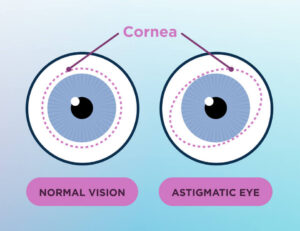
Astigmatism is a refractive condition where the cornea or natural lens is shaped more like a football than a perfectly round ball. That uneven curvature causes light to focus at more than one point inside the eye, which can lead to blurred or distorted vision at all distances. Many people have some degree of astigmatism, often without realizing it, before cataract surgery is ever on the table.
Why astigmatism can still be present after cataract surgery
There are two main reasons astigmatism can persist after cataract surgery: pre-existing astigmatism that wasn’t fully corrected by the lens implanted, and surgically induced astigmatism from changes to the cornea during healing.
Cataract surgery removes the clouded natural lens and replaces it with a synthetic intraocular lens (IOL). That replacement lens is chosen based on preoperative measurements—but those measurements reflect the eye as it was before surgery, not as it will be after healing. The cornea settles, the new lens positions itself inside the eye, and the final optical result depends on how all of that comes together.
The two most common reasons for residual astigmatism after cataract surgery:
- Pre-existing astigmatism that wasn’t fully addressed
If you had astigmatism before surgery, a standard (non-toric) IOL will not correct it. Unless the surgeon specifically chose a lens or technique to address astigmatism during surgery, any astigmatism you had before will still be there afterward.
- Surgically-induced astigmatism
The small incisions made during cataract surgery can slightly alter the shape of the cornea as the eye heals. In most cases this effect is minor. In some cases it’s more noticeable. It is a known characteristic of how eyes heal, not an indication that something went wrong.
Can cataract surgery correct astigmatism?
There is no single right answer to how astigmatism should be corrected. The best approach depends on the degree of astigmatism, the type of IOL implanted, the overall health of your cornea, and your personal preferences about glasses, secondary procedures, and what you want your vision to look like day to day.
What matters most is that you have the conversation with your surgeon, ideally before surgery, so the lens and the approach are chosen with your astigmatism in mind from the start.
Your options for correcting astigmatism during or after cataract surgery
Each option has a different role depending on when the astigmatism is being addressed: during the cataract procedure itself, or afterward. Here is a plain-language overview.
 Glasses or contact lenses
The simplest approach for mild residual astigmatism is a prescription for glasses or toric contact lenses. It’s non-invasive and can be adjusted over time as the eye continues to settle. For patients who don’t mind wearing correction for certain tasks, this is often the first option discussed.
 Toric intraocular lens
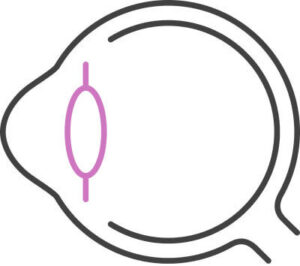
A toric lens for cataract surgery is designed to correct astigmatism at the time of implantation. The lens is selected based on preoperative measurements and placed at a specific axis inside the eye to counteract the corneal irregularity. If the lens rotates slightly during healing, it may need to be repositioned. Toric IOLs must be chosen before surgery; once implanted, they cannot be adjusted.
 Limbal relaxing incisions
Limbal relaxing incisions are small, precise cuts at the edge of the cornea that allow it to take on a more even curvature. They can sometimes be performed at the time of cataract surgery, or as a follow-up procedure for mild residual astigmatism.
 Laser vision correction (LASIK or PRK)
After the eye has fully healed and the prescription has stabilized—typically several months after cataract surgery—laser vision correction can be used to reshape the cornea and reduce remaining astigmatism. This is a secondary surgical procedure. Timing and eligibility depend on corneal health and prescription stability.
 The Light Adjustable Lens™
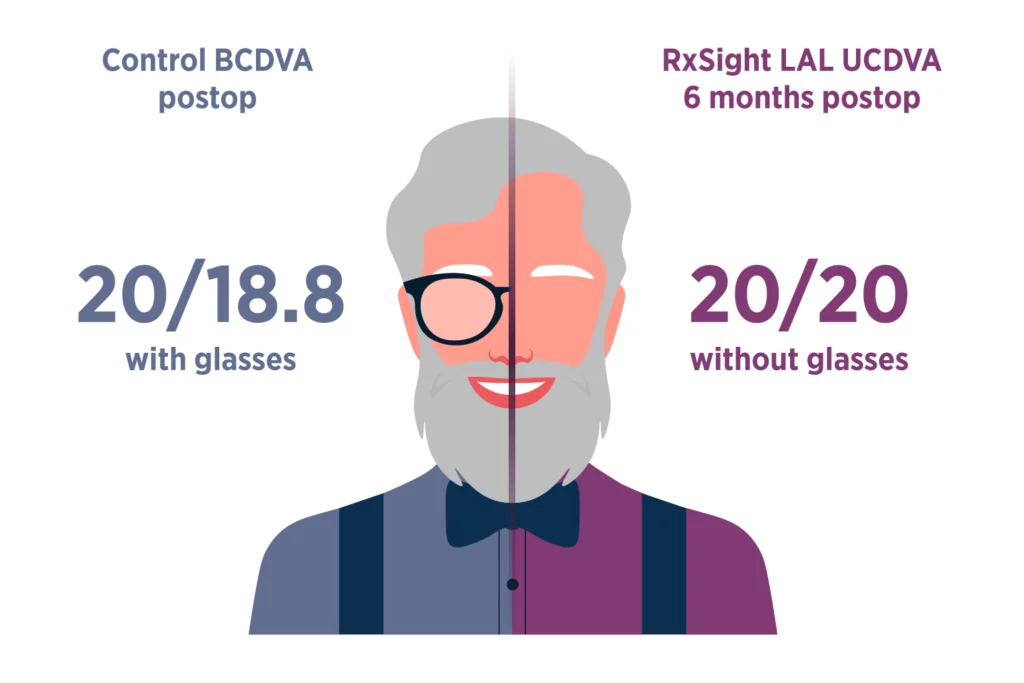
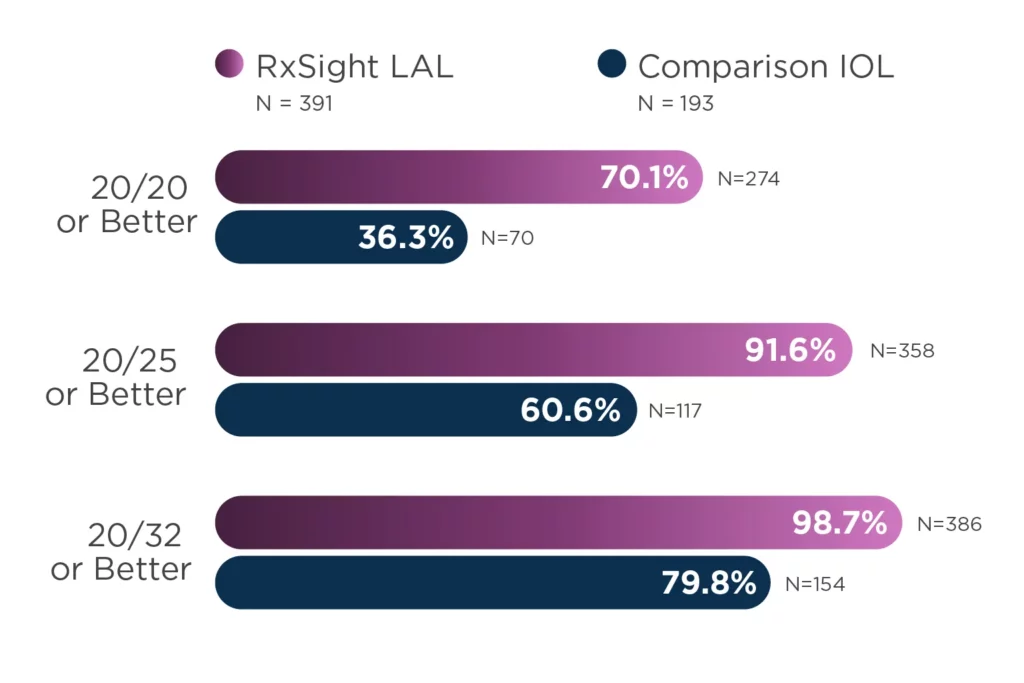
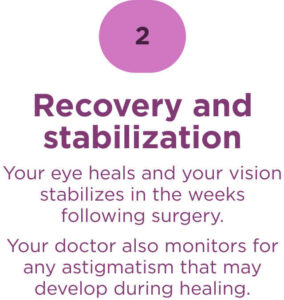
The Light Adjustable Lens™ (LAL®) is the only FDA-approved intraocular lens that can be customized after cataract surgery. Instead of the prescription being finalized before the procedure based on preoperative estimates, the LAL prescription is set after the eye has healed—based on how the eye actually looks post-surgery. For patients with astigmatism, this means the adjustment process can account for how much astigmatism remains once recovery is underway, rather than relying on preoperative predictions alone.
How the Light Adjustable Lens is designed for astigmatism
Most IOLs are fixed: the prescription is chosen before surgery and once implanted, it cannot be changed. If the eye heals in a way that leaves more astigmatism than expected, patients may consider options such as glasses, contact lenses, or additional procedures, depending on their outcome and preferences.
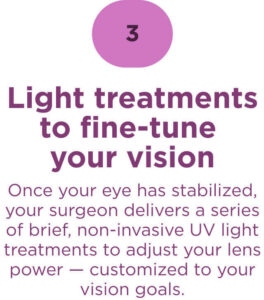
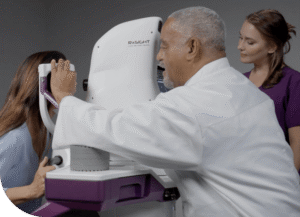
The LAL works differently. It’s implanted during a standard cataract procedure, but the prescription isn’t finalized at that time. Once the eye has healed sufficiently, the surgeon uses a device called the Light Delivery Device™ (LDD™) to adjust the lens power in the office.
 About the light treatments
You will receive between 1 and 3 light treatments, each lasting approximately 90 seconds and separated by at least 3 days. The total number of light treatments is based on achievement of the desired visual outcome that you and your surgical eye care team selected. Once you have achieved your final optimal vision, the lens power is permanently locked with 2 final light treatments to prevent any further changes.
About the RxSight® UV-protective glasses
During the adjustment phase, patients are required to wear RxSight ultraviolet (UV)-protective glasses during all waking hours. The same photosensitive property that makes the adjustments possible also means the lens needs to be shielded from unintended UV exposure until the prescription is locked in. Once the final lock-in treatments are complete, the lens is no longer photosensitive, and the RxSight UV-protective glasses are no longer required.
Whether the LAL is appropriate for your situation, including the degree and type of astigmatism you have, is a conversation to have with your eye care team.

What to ask your surgeon about astigmatism and cataract surgery
If you have astigmatism and you’re preparing for cataract surgery, or if you’re post-surgery and your vision doesn’t feel right, these are useful questions to bring into your next appointment:
- How much astigmatism do I currently have, and is it the kind that can be addressed during cataract surgery?
- What IOL options do you offer for patients with astigmatism, and which ones do you think might fit my situation?
- If I end up with residual astigmatism after surgery, what would my options be?
- How does the Light Adjustable Lens compare to a toric IOL for someone with my eyes?
- What would my recovery timeline look like if I chose one option versus another?
Frequently asked questions
These are the questions patients most commonly search for. Short, direct answers below—with the reminder that your eye care team is the right resource for guidance specific to your situation.
Does Medicare pay for cataract surgery with astigmatism?
Medicare typically covers medically necessary cataract surgery and a standard IOL. The portion of the procedure that specifically corrects astigmatism—such as a toric IOL, a Light Adjustable Lens, limbal relaxing incisions, or laser enhancement—is generally considered an upgrade and is typically an out-of-pocket cost. Coverage specifics vary. Your surgeon’s office and your Medicare plan are the right places to confirm what is and isn’t covered in your situation.
Why is my astigmatism worse after cataract surgery?
In most cases, astigmatism that feels worse after cataract surgery is one of two things: astigmatism that was already present and wasn’t fully corrected by the lens implanted, or small changes to the cornea from healing that altered the refractive outcome. Both are known characteristics of how eyes recover after surgery, not necessarily an indication that something went wrong. Your surgeon can measure what’s happening and walk you through correction options.
Does cataract surgery correct astigmatism?
Cataract surgery can correct astigmatism, but it depends on the type of lens and approach used. A standard IOL does not correct astigmatism—if you had it before surgery, you’ll likely still have it afterward. A toric IOL, limbal relaxing incisions, laser vision correction, or the Light Adjustable Lens can address astigmatism either during or after the procedure. The right option is one you and your surgeon choose together based on your eyes and your goals.
Does astigmatism get worse after cataract surgery?
For most patients, astigmatism does not meaningfully worsen after cataract surgery. In some cases, small changes to the cornea during healing can slightly increase the amount of astigmatism—this is called surgically induced astigmatism, and it is usually modest. If you feel your astigmatism is noticeably worse, talk with your surgeon. A postoperative measurement can clarify what’s actually happening and what the options are.
Can cataract surgery cause astigmatism?
Cataract surgery can, in some cases, cause small changes to the cornea that result in a mild amount of surgically induced astigmatism. This is a known characteristic of how the cornea heals after incisions. Most of the time the effect is minor. When it’s more noticeable, it can usually be addressed with glasses, contacts, or a follow-up procedure.
Can glasses correct astigmatism after cataract surgery?
Yes. Prescription glasses, including those with a cylinder correction for astigmatism, can effectively correct residual astigmatism after cataract surgery for patients who are comfortable wearing them. For patients motivated to reduce their dependence on glasses, options including toric contact lenses, laser vision correction, limbal relaxing incisions, and the Light Adjustable Lens may offer a path toward greater visual freedom—your surgeon can help determine which is right for you.
The next step is a conversation
If you have astigmatism and are exploring your options, either before or after cataract surgery, the most useful next step is a conversation with an eye care professional who can evaluate your specific situation. They can tell you what’s realistic for your eyes, what the trade-offs look like, and whether the Light Adjustable Lens is a fit for what you’re trying to achieve.

Find a Light Adjustable Lens doctor near you at RxSight.com.
For informational purposes only. Not intended as medical advice. Always consult your eye care professional for guidance specific to your situation. For full safety information and indications for use, visit https://rxsight.com/.
©2026 RxSIGHT. All Rights Reserved.