When it comes to cataract surgery, choosing the right intraocular lens (IOL) to replace your eye’s natural lens after it becomes cloudy is one of the most important decisions you’ll make. Your new lens will affect how you see for the rest of your life, whether you’re reading, driving, playing sports, gardening, cooking, crafting, or enjoying the sunset.
Today, IOLs fall into one of two categories: fixed and adjustable. Like your glasses, both fixed and adjustable IOLs have a prescription, called the lens power. Let’s explore the differences between the power of fixed and adjustable lenses and see why a lens that offers customization and adjustability could be a game changer for your vision after cataract surgery.
Fixed IOLs
A fixed IOL has a power that is set to your prescription before cataract surgery while you still have cataracts. Your eye surgeon makes careful measurements shortly before your surgery date to determine the best lens power for you.
Pros of Fixed IOLs
- They are widely available
- They are effective and provide excellent results for many people
- There are no extra steps after surgery beyond routine postoperative care
Limitations of Fixed IOLs
- The lens power is chosen before surgery
- Even with precise measurements, you may still require glasses for certain activities
- The lens power cannot be altered after it’s been implanted without additional surgery
Adjustable Lenses
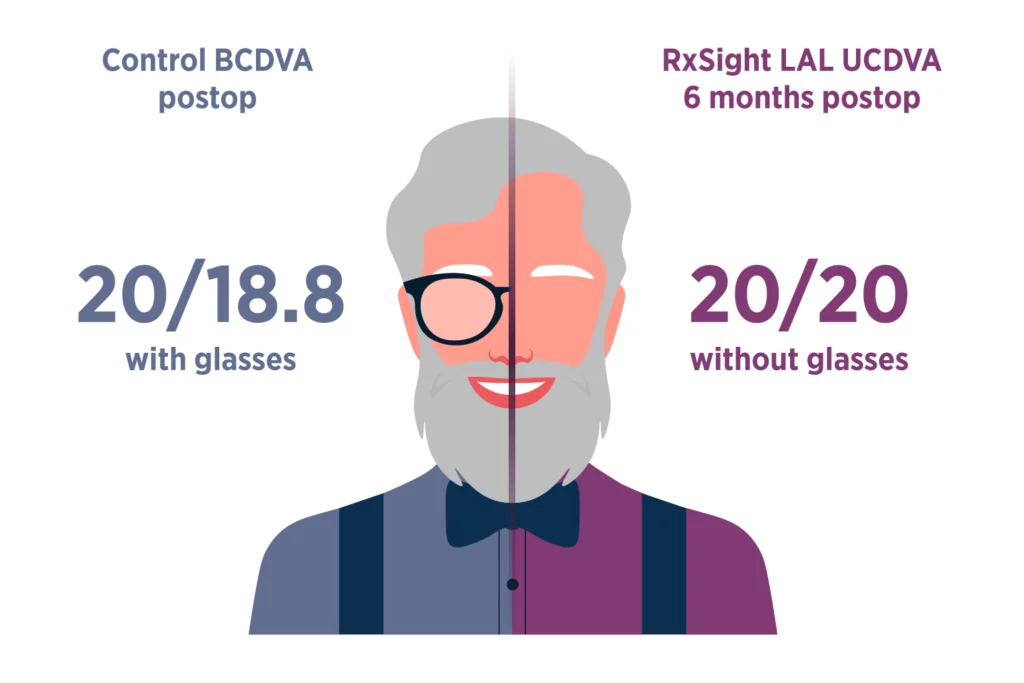
The RxSight Light Adjustable Lens® (LAL®) is in a category all its own. It allows your eye surgeon to customize your vision after surgery by adjusting the IOL power once your cataract is removed and after your eye has healed from the procedure. It allows you time to experience how different lens powers feel in real life before deciding which one works best for you.
The Light Adjustable Lens is implanted during a routine cataract surgery procedure. After your eye heals, you and your eye doctor assess your vision together and adjust the power as needed with a safe, targeted light treatment. This process may be repeated up to three times until your vision feels right. Once you’re happy with the outcome, the power is locked in with two final light treatments to ensure no further changes.
Pros of Adjustable Lenses
- Vision can be customized after cataract surgery
- Allows you to test drive different lens powers before making a final decision
- The lens can be tailored to match your lifestyle needs and vision requirements
- Adjustments are noninvasive, quick, and painless
Cons of Adjustable Lenses
- Requires multiple follow-up visits for light adjustments and the final lock-in
- After surgery, and while your vision is still in the adjustment phase, RxSight UV-protective glasses must be worn to prevent unwanted lens changes before the final lock-in
- May involve higher out-of-pocket costs compared to standard fixed lenses
While adjustability involves a few extra steps to the postoperative process, these steps are what make the Light Adjustable Lens so powerful for your vision outcomes. Each visit you have with your eye care specialist is an opportunity to refine your vision with a precision that simply isn’t possible with fixed lenses.
Although adjustable lenses may have a higher upfront cost, many patients see it as an investment in long-term vision goals. For most, these short-term commitments and added investment are a small trade-off for the long-term benefit of having vision customized exactly to their lifestyle and visual needs.
The Bottom Line
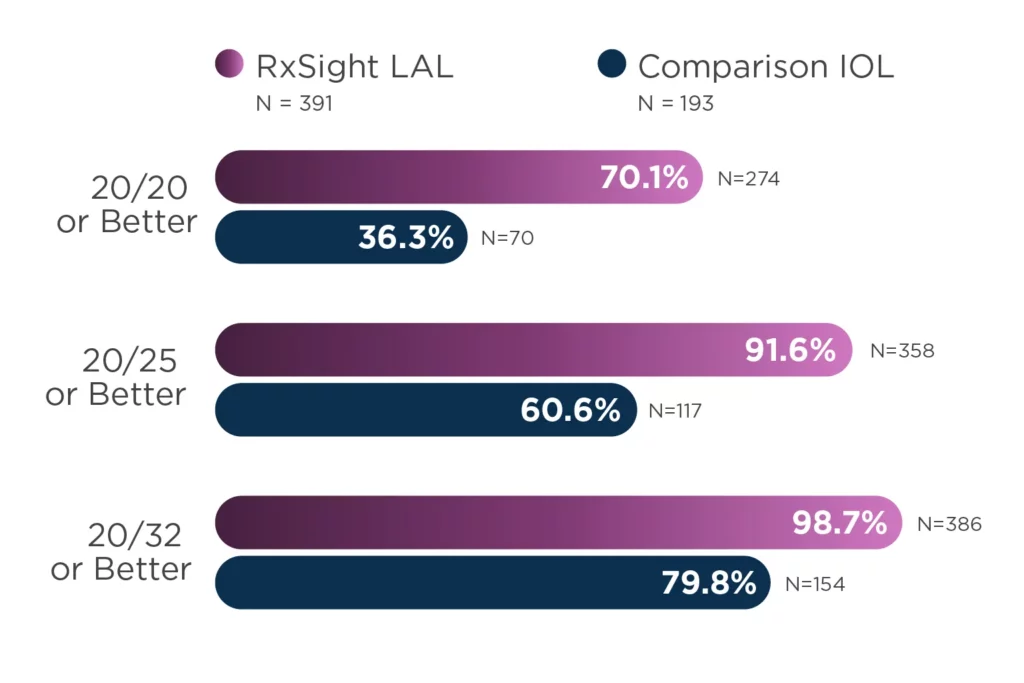
Fixed lenses work well for many people, but adjustable lenses offer you the freedom to refine your vision after surgery, allowing you to try out your new vision before finalizing the lens power during lock-in. The Light Adjustable Lens offers unmatched flexibility and personalization, increasing the likelihood you’ll achieve your best vision for your lifestyle.