了解白内障手术:让您的视力从此更清晰

如果您的眼科医生告诉您患有白内障,您无需独自面对。大约有 8,350 万人因白内障而视力受损。1您从一开始注意到这些视力变化,医生可能会与您讨论白内障手术。以下是您需要了解的有关白内障、白内障手术和晶状体选择的信息。

什么是白内障?

在您的眼睛里有一个天然晶状体,它负责聚焦进入眼睛的光线,帮助您看东西。刚出生时,婴儿的天然晶状体是透明的。但随着年龄的增长,晶状体中的蛋白质会分解并凝结在一起,导致晶状体浑浊。随着时间的推移,浑浊的晶状体可能会引起一些副作用,包括视力模糊、暗淡和扭曲。它还可能导致物体看起来模糊不清,或者颜色没有您过去看到的那么鲜艳,就像透过雾蒙蒙或布满灰尘的汽车挡风玻璃看东西一样。

白内障通常与自然衰老过程有关,会逐渐发展,但也可能迅速发展和/或由以下原因引起:

  • 糖尿病等疾病
  • 眼睛受伤、曾经做过眼部手术或上半身接受过放射治疗
  • 长时间暴露在阳光下,尤其是在没有佩戴防紫外线太阳镜的情况下
  • 服用某些药物,如皮质类固醇,可能会导致白内障的早期形成
  • 吸烟
  • 父母、兄弟姐妹或其他家庭成员患有先天性白内障

不幸的是,白内障不会自行好转,眼科医生也无法预测白内障的进展速度。恢复清晰视力的唯一方法就是进行白内障手术,用人工晶状体 (IOL) 取代浑浊的晶状体。

白内障手术过程中会发生什么?

一旦白内障影响到您的日常生活,使您无法做想做或需要做的事情,通常就会建议您进行白内障手术。

白内障手术是当今最常见、最安全的手术之一。该手术每年帮助数百万人重获清晰视力。我们来逐步解释白内障手术的内容、安全性,以及 RxSight Light Adjustable Lens™ (LAL™) 等新技术如何让您比以往任何时候都能更好地控制视力。

白内障手术是一种简单的门诊手术。该手术可能在门诊手术中心或医院进行,眼外科医生会为您提供术前指导。以下是手术当天的预期事项:

  1. 麻醉:手术过程中您将保持清醒,可能会看到光线和运动。通过滴入麻醉药水或在眼睛周围进行局部麻醉,使您的眼睛失去知觉,让您感觉舒适。您可能还会服用帮助放松的药物
  2. 摘除晶状体:眼外科医生会在白内障处开一个小切口,使用温和的超声波能量将白内障击碎。然后通过同一个小切口摘除白内障。
  3. 更换晶状体:将一个透明的人工 IOL 放置在天然晶状体原来的位置上。在大多数情况下,切口会“自动封口”,无需缝合即可自然愈合。
  4. 手术后:在麻醉恢复期间,将在您的眼睛上放置防护罩以保护眼睛,您将在恢复区休息约 15 到 30 分钟。

白内障手术的安全性如何?

白内障手术是医学界最安全的手术之一。在美国,白内障手术的成功率超过 95%。2严重的并发症非常罕见,大多数患者在术后头几天内就会发现视力有所改善。

选择适合您的晶状体

IOL 是永久性的。您选择的 IOL 将成为您在清醒时每时每刻赖以视物的光学媒介。传统的 IOL 是固定型晶状体,需要外科医生在手术前对眼睛进行精确测量并选择晶状体度数。一旦植入晶状体,如果不进行额外的手术就无法改变。幸运的是,新技术的出现为个性化视力提供了更多可能。LAL 是唯一一款可以在手术后进行定制的 IOL,让您可以根据自己的生活方式和喜好来预览和调整视力。您的眼科护理专家会在术后几周内使用无痛光照治疗来微调您的视力,帮助您获得最适合自己的视力。

要旨

白内障手术是一种快速的门诊手术,可以恢复视力,提高生活质量,每只眼睛的手术时间通常不会超过 15 分钟。白内障手术恢复期短,安全记录良好,可帮助您立即恢复日常活动。采用 LAL,您在术后视力效果方面将拥有前所未有的更多选择,在体验新视力后,晶状体会根据您的独特需求进行调整,让您对最终效果更有信心。


  1. Vision Loss Expert Group of the Global Burden of Disease Study; GDB 2019 Blindness and Vision Impairment Collaborators. Global estimates on the number of people blind or visually impaired by cataract: a meta-analysis from 2000 to 2020. Eye (Lond). 2024;38(110:2156-2172).
  2. Moshirfar M, Milner D, Patel BC. Cataract surgery. July 18, 2023. Accessed August 13, 2025. StatPearls [Internet]. https://www.ncbi.nlm.nih.gov/books/NBK559253/

近期文章

白内障手术与干眼症:须知事项

固定型与可调节型晶状体设计:了解哪种设计更适合您

使用 Light Adjustable Lens™ 先体验再确定您的视力

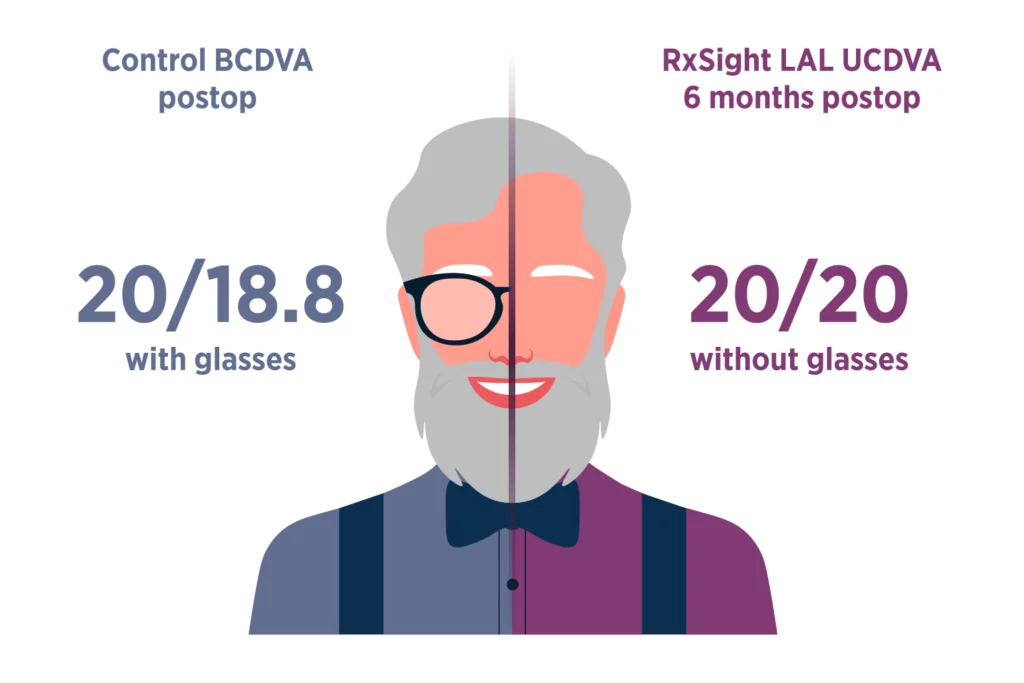
LAL patients saw nearly as well without glasses (UCDVA) as control patients did with glasses (BCDVA).

The Light Adjustable Lens provides optimized vision for patient satisfaction.2

Light Adjustable Lens patients saw nearly as well without glasses (UCDVA) as control patients did with glasses (BCDVA).

Since the Light Adjustable Lens is a monofocal lens, there is low risk of dysphotopsias caused by splitting light, leading to potentially enhanced vision and patient satisfaction.

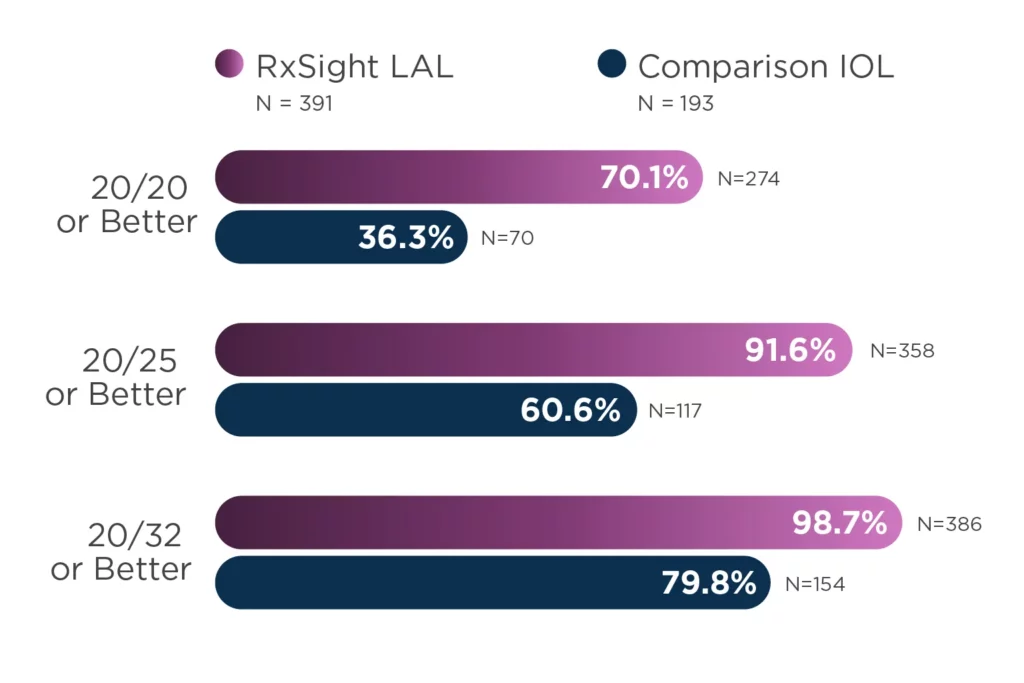
LAL patients are approximately two times more likely to achieve 20/20 vision or better without glasses at 6 months.

The Light Adjustable Lens offers LASIK-like accuracy in cataract surgery.2,3

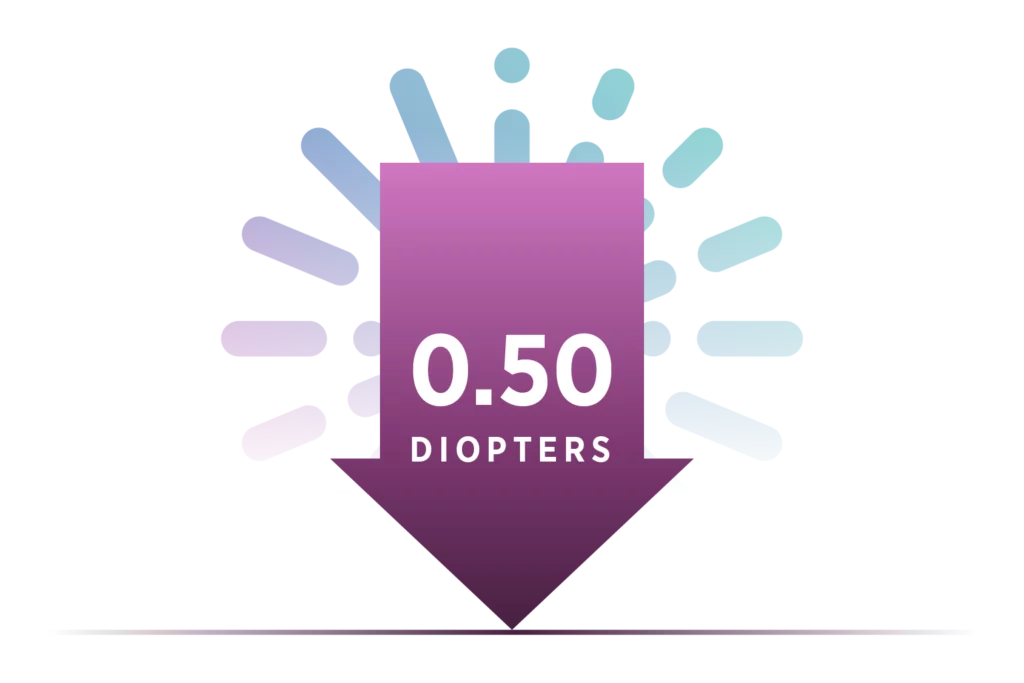
92% of eyes (N = 391) achieved results within 0.50 D of target manifest refraction spherical equivalent (MRSE).

Patients are approximately two times more likely to achieve 20/20 vision or better without glasses at 6 months.

The study was a prospective, controlled, multicenter, 12-month study of 600 patients (ITT population) randomized to receive implantation with the RxSight LAL (N = 403) or a commercially available monofocal IOL (N = 197). Effectiveness analyses included 391 LAL patients and 193 control patients. Primary safety variables included best spectacle-corrected visual acuity (BSCVA) at 6 months and incidence of sight-threatening complications and adverse events. Primary effectiveness variables included percent reduction in manifest cylinder at 6 months, percent mean absolute reduction in MRSE at 6 months, and rotation of meridian of LAL at 6 months. Percent of eyes with an uncorrected visual acuity (UCVA) of 20/20 or better at six months post-operatively compared between the LAL treatment group and the monofocal control group was a secondary endpoint.

The Light Adjustable Lens corrects as low as 0.50 D of astigmatism, which is the lowest level approved to be treated.

The ability to treat 0.50 D of postoperative cylinder makes the Light Adjustable Lens the only IOL in the United States approved to correct this level of vision-altering astigmatism. Astigmatism of as little as 0.50 D can reduce visual acuity by one line, and the impact on dynamic, functional visual acuity and low-contrast acuity is even greater.1