固定式與可調節型晶體設計:瞭解哪種設計適合你

說到白內障手術,選擇合適的人工晶體 (IOL) 來替代混濁的天然晶體是你要做的最重要的決定之一。無論是閱讀、駕駛、運動、園藝、烹飪、手工製作還是欣賞日落,新的晶體都將影響你餘生的視力。

如今,IOL 分為兩類:固定式與可調節型。與眼鏡一樣,固定式與可調節型 IOL 都有一個驗光處方,稱為晶體度數。讓我們來探討一下固定式與可調節型晶體度數的不同之處,看看為什麼可定制和可調節的晶體能為你的白內障術後視力帶來顛覆性的改變。

固定式 IOL

固定式 IOL 的度數是在白內障手術前根據你的驗光處方設定的,當時你還患有白內障。眼外科醫生會在手術日期前不久進行仔細測量,以確定最適合你的晶體度數。

固定式 IOL 的優點

  • 廣泛使用
  • 對許多人來說,這類 IOL 很有效,而且效果極佳
  • 手術後除了常規的術後護理外,沒有額外的步驟

固定式 IOL 的局限性

  • 在手術前選擇晶體度數
  • 即使進行了精確測量,在某些活動中仍可能需要佩戴眼鏡
  • 植入晶體後,如果不進行額外手術,就無法改變晶體度數

可調節型晶體

RxSight Light Adjustable Lens™ (LAL™) 自成一類,與眾不同。白內障摘除後,眼部痊癒後,眼外科醫生可透過調節 IOL 度數,為你度身訂造術後視力。在決定哪個度數最適合你之前,你可以先體驗一下不同晶體度數在現實生活中的感覺。

Light Adjustable Lens(光可調晶體)是在常規白內障手術過程中植入的。眼睛痊癒後,你和眼科醫生會一起評估你的視力,並根據需要透過安全、有針對性的光療來調整度數。此過程最多可重複三次,直到你感覺視力合適為止。一旦你對效果感到滿意,就會透過最後兩次光療鎖定度數,以確保不會再發生變化。

可調節型晶體的優點

  • 白內障手術後可個人化調整視力
  • 在做出最終決定前,你可以先試用不同的晶體度數
  • 可根據你的生活方式和視力需求度身訂造晶體
  • 調整無創、快速、無痛

可調節型晶體的缺點

  • 需要多次覆診以進行光照調整和最終鎖定
  • 手術後,當你的視力仍處於調整階段時,必須佩戴 RxSight 防紫外線保護眼鏡,以防止晶體在最終鎖定前發生不必要的變化
  • 與標準固定式晶體相比,自付費用可能較高

雖然可調節型晶體在術後過程中需要一些額外的步驟,但這些步驟正是 Light Adjustable Lens 在視力效果上如此出色卓越的原因。你與眼科護理專家的每一次會面,都是一次精確調整視力的機會,這種精準度是固定式人工晶體無法達到的。

雖然可調節型晶體的前期費用可能較高,但許多患者將其視為對長期視力目標的投資。對於大多數人來說,這些短期的承諾和額外的投資只是一個小的權衡,因為他們可以根據自己的生活方式和視力需求來精確個人化調整視力,進而獲得長期的收益。

要旨

對許多人來說,固定式晶體效果很好,但可調節型晶體為你提供了手術後完善視力的自由,讓你在鎖定前先體驗新的視力,再最終確定晶體度數Light Adjustable Lens 提供了無與倫比的靈活性和個人化,使你更有可能根據自己的生活方式獲得最佳視力。

最新文章

白內障手術與乾眼症:須知事項

瞭解白內障手術:讓你的視力從此更清晰

Happy woman playing pickleball

使用 Light Adjustable Lens™ 先體驗再確定你的視力

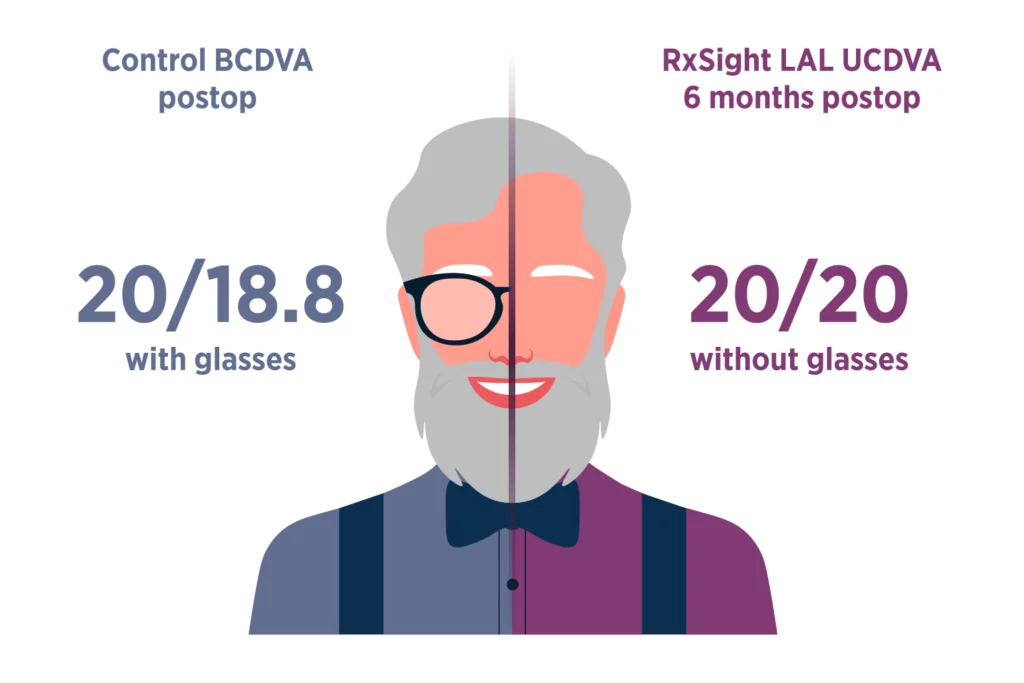
LAL patients saw nearly as well without glasses (UCDVA) as control patients did with glasses (BCDVA).

The Light Adjustable Lens provides optimized vision for patient satisfaction.2

Light Adjustable Lens patients saw nearly as well without glasses (UCDVA) as control patients did with glasses (BCDVA).

Since the Light Adjustable Lens is a monofocal lens, there is low risk of dysphotopsias caused by splitting light, leading to potentially enhanced vision and patient satisfaction.

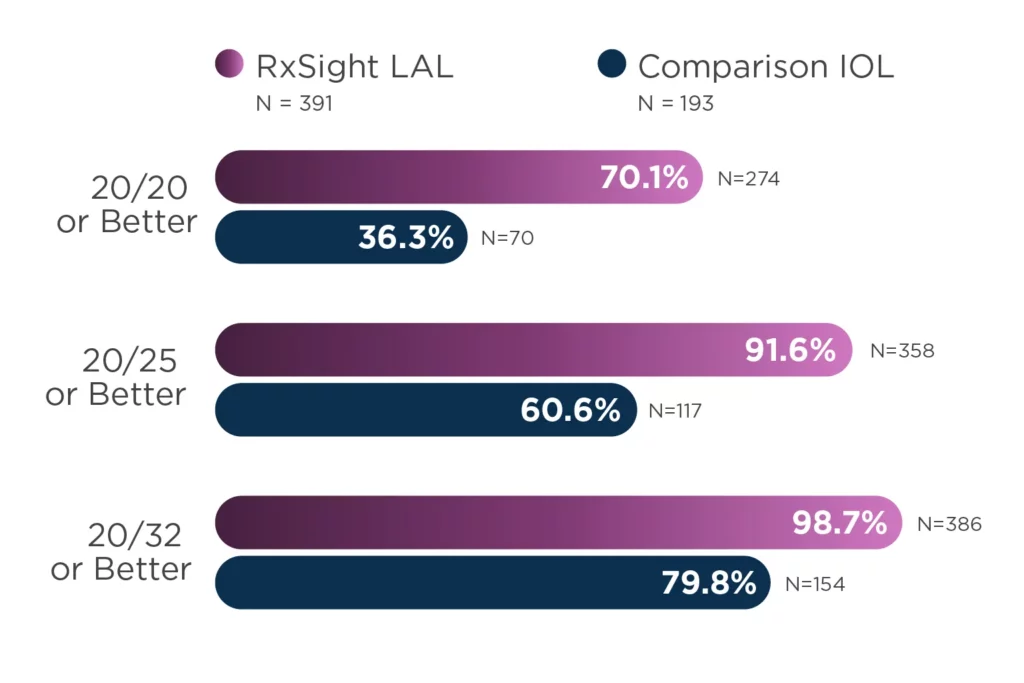
LAL patients are approximately two times more likely to achieve 20/20 vision or better without glasses at 6 months.

The Light Adjustable Lens offers LASIK-like accuracy in cataract surgery.2,3

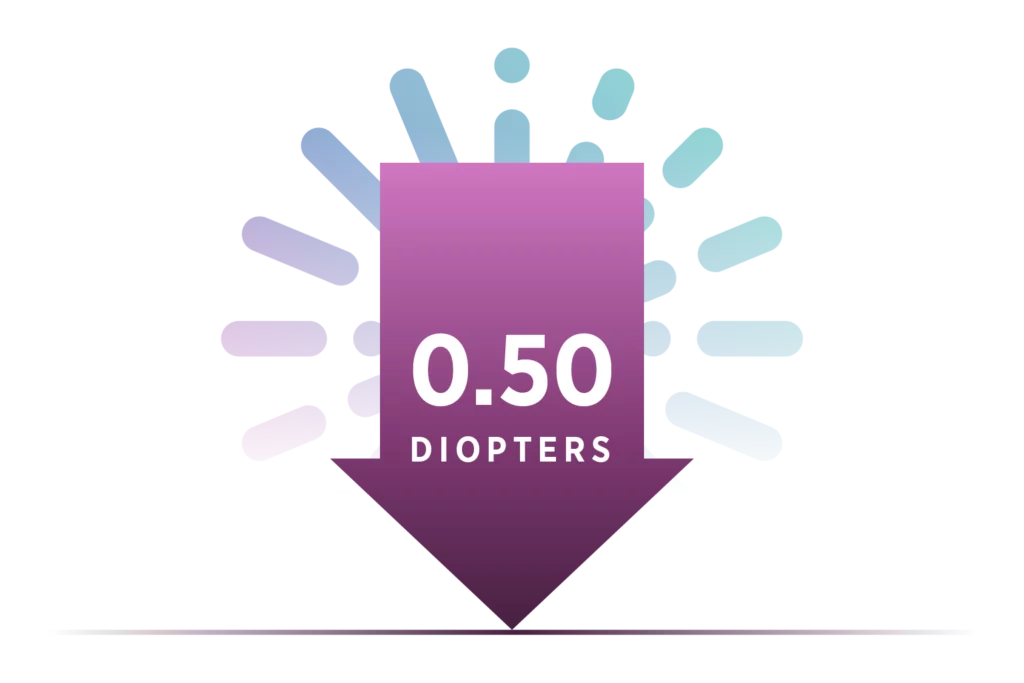
92% of eyes (N = 391) achieved results within 0.50 D of target manifest refraction spherical equivalent (MRSE).

Patients are approximately two times more likely to achieve 20/20 vision or better without glasses at 6 months.

The study was a prospective, controlled, multicenter, 12-month study of 600 patients (ITT population) randomized to receive implantation with the RxSight LAL (N = 403) or a commercially available monofocal IOL (N = 197). Effectiveness analyses included 391 LAL patients and 193 control patients. Primary safety variables included best spectacle-corrected visual acuity (BSCVA) at 6 months and incidence of sight-threatening complications and adverse events. Primary effectiveness variables included percent reduction in manifest cylinder at 6 months, percent mean absolute reduction in MRSE at 6 months, and rotation of meridian of LAL at 6 months. Percent of eyes with an uncorrected visual acuity (UCVA) of 20/20 or better at six months post-operatively compared between the LAL treatment group and the monofocal control group was a secondary endpoint.

The Light Adjustable Lens corrects as low as 0.50 D of astigmatism, which is the lowest level approved to be treated.

The ability to treat 0.50 D of postoperative cylinder makes the Light Adjustable Lens the only IOL in the United States approved to correct this level of vision-altering astigmatism. Astigmatism of as little as 0.50 D can reduce visual acuity by one line, and the impact on dynamic, functional visual acuity and low-contrast acuity is even greater.1